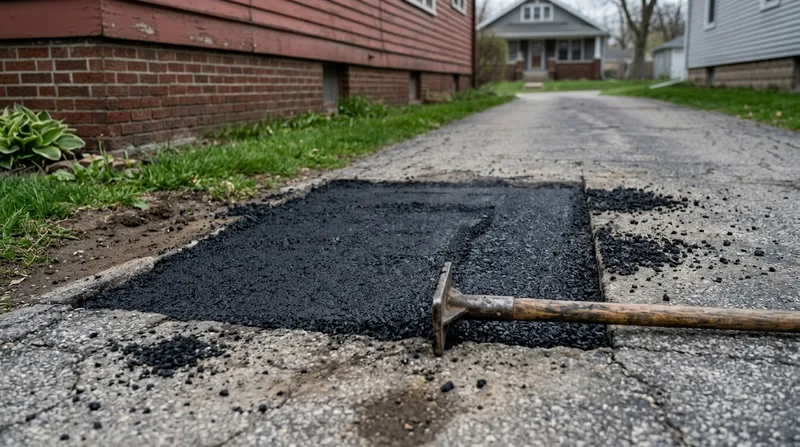




Springfield's driveways face a punishing cycle: deep freeze-thaw swings from December through March, heavy spring rains that soak the clay subgrade, and the accumulated wear of decades on the older neighborhoods around the Lincoln Home, Aristocracy Hill, and Enos Park, where narrow lots and tight aprons mean every pothole and heave shows. From the early bungalows under old oaks in Washington Park to the post-war worker cottages on the north side to the sprawling 1980s-2020s subdivisions in Westchester and Panther Creek, driveway repair in Springfield is not a luxury, it is a seasonal necessity. Sunken aprons, crumbling edges, snowplow gouges, and sections heaved over wet clay all demand full-depth patches that key into sound asphalt instead of skin patches that peel by spring. We tell you honestly when a repair buys you years and when the money belongs in resurfacing instead. Call us at (447) 226-1294 for a free, written estimate with tonnage specs, or learn more about our full range of asphalt driveway paving and installation.
Why Driveway Repair Matters in Springfield's Climate
Central Illinois averages 39 inches of rain per year, and most of it falls during the spring thaw and summer storms when the ground is already saturated. The clay subgrade under Springfield's prairie loess holds water like a sponge, and when that water freezes, it heaves the asphalt above it. Dozens of freeze-thaw cycles every winter pop potholes and lift apron edges; ice storms and road salt and plows chew the shoulders from December through March; and in the coal-mining towns south of the city, old subsidence can settle pavement unpredictably. Ignoring small cracks and divots now means a much larger repair bill in spring, or a full resurfacing when the damage spreads.
- We remove failed asphalt and probe the base to confirm it is still sound before patching.
- We install full-depth patches that key into the surrounding asphalt and compact properly for years of service.
- We measure and specify tonnage in writing so you know exactly what you are paying for.
- We recommend patching when it makes sense and resurfacing when the damage is too widespread to patch economically.
Catching and repairing damage before spring runoff prevents it from spreading through the base and saves thousands in later restoration work.
Key info: In neighborhoods like Enos Park and Vinegar Hill where 1850s brick Italianates sit on narrow grid lots with tight side drives, water management is critical. A single pothole can lead to edge failure across the entire apron if it is not sealed and patched properly.
For more on the specific damage patterns we see, visit our page on pothole repair and asphalt patching, where we detail the spring damage cycle in depth. You can also check Illinois Secretary of State resources on contractor regulations to learn how municipal licensing works in your village.
How We Repair Driveways in Springfield: A Step-by-Step Approach
Driveway repair starts with a clear-eyed assessment. We walk your drive, identify the failed sections, probe the base with a small shovel or spike to confirm the asphalt above is the only problem, and measure the area in square feet. If the base is still solid, a full-depth patch is the right move. If the base is soft or broken, we will tell you that resurfacing or replacement is the better investment. We never patch over a bad base just to collect a quick check.
- We mark the repair area and cut clean, vertical edges into sound asphalt using a saw or air chisel.
- We remove all failed material and debris, then clean the hole down to the base.
- We inspect the base for softness, settlement, or water damage and report honestly on whether a patch will hold.
- We tack the exposed edges with a light coat of asphalt cement to help the new patch bond.
- We place hot mix asphalt at the proper temperature and compact it firmly in lifts until it is level with the surrounding surface.
- We allow the patch to cool before opening the drive to traffic, typically within 24 to 48 hours depending on weather.
The entire process is built around making sure the repair lasts. Rushing the compaction or using cold asphalt is how patches fail by spring.
Local example: A homeowner in the Panther Creek subdivision called us in early April after a pothole opened near the garage apron. We patched it the same week, and two years later it remains solid while the rest of the drive has started to crack. That early repair decision saved her from having to resurface the entire drive this year.
If your driveway has extensive cracking or multiple failed sections covering more than 30 percent of the surface, asphalt resurfacing and overlay is often the smarter choice than patching multiple spots. We will tell you which path makes sense for your drive and your budget.
Driveway Repair Methods: Patch vs. Resurfacing vs. Replacement
| Approach | Description | Best For |
|---|---|---|
| Full-Depth Patching | Remove failed asphalt and base material in a defined area, inspect the subgrade, and install new asphalt at proper compaction and temperature. | 1 to 3 localized failures per drive, solid base underneath, less than 15 percent of total surface area affected. |
| Asphalt Overlay | Mill or grind the top 1 to 2 inches of existing asphalt, inspect the base, and lay a new surface course over the existing structure. | Moderate cracking, moderate settling, base is sound, drive is 15 to 30 years old and structurally adequate. |
| Full Resurfacing | Mill the entire drive to remove all failed asphalt, proof roll the base, repair or replace base material as needed, and install a new surface. | Extensive alligator cracking, widespread settling, base damage visible in multiple spots, drive over 25 years old. |
| Full Replacement | Excavate and remove all asphalt and base material, rebuild the base to proper depth and compaction, and install a complete new drive. | Base failure, severe subsidence, drainage problems, or a drive on soft or unstable ground that needs complete rebuilding. |
Driveway Repair Cost in Springfield: What to Expect
A single pothole or small patch repair in Springfield typically starts at $450 to $600, depending on the size of the hole and whether the base is intact. Most homeowners see repairs in the $600 to $1,200 range for two or three failed sections on a typical residential drive. The cost moves upward if the base is compromised, if we need to remove and replace a larger depth of material, or if the drive is in a location that requires permits or HOA approval.
Several factors affect the final price. First, the size and depth of the failed area: a small 2-by-3-foot pothole costs far less than a 6-by-10-foot section of heaved apron. Second, the condition of the base: if the subgrade is soft or wet, we may need to remove more material or add base rock before patching, which increases labor and materials. Third, access: if your drive is tight or if we need to move landscaping or parked cars, setup time adds to the bill. Fourth, timing: spring and early fall are our peak seasons, and scheduling may be tighter.
We provide a written estimate that includes measurements in square feet, tonnage of asphalt or base material needed, and a breakdown of labor and materials. This transparency is how you compare quotes fairly and avoid the old door-to-door pitch of "we have leftover asphalt from a job nearby." For a detailed pricing overview across all our services, visit our pricing page. If your drive has extensive damage or multiple problem areas, we may recommend resurfacing instead of patching, which is a different cost structure entirely and is covered in our asphalt resurfacing and overlay page.
The best way to know what your repair will cost is to call us at (447) 226-1294 for a free estimate. We respond within 24 hours and bring measurements and written specs to every job.
Driveway Repair Near Me: What Springfield Homeowners Should Know When Hiring a Contractor
The paving trade in Illinois is regulated at the municipal level, not the state level. Your village or city may require a contractor license or registration for asphalt work, and some do not. Before you hire anyone, ask your contractor for proof of the license or registration your own municipality requires, and verify it directly with your village or city clerk. That single step weeds out most of the fly-by-night operators. Fully insured status is non-negotiable: confirm the contractor carries general liability and workers compensation insurance, and ask for a certificate of insurance naming you as an additional insured. If the contractor refuses, walk away.
Get written estimates from at least two contractors before making a decision. A good estimate includes the size of the repair in square feet, the depth and tonnage of materials, labor costs, and a timeline. Be wary of any quote that is dramatically lower than the others: it usually means the contractor is cutting corners on compaction, material quality, or base inspection. Ask for references and follow up with them. Call a neighbor who had work done and ask if the repair is still holding two years later.
If your driveway is in an HOA community, check your architectural guidelines before work begins. Many subdivisions in the Westchester and Panther Creek corridors and in Chatham and Sherman restrict the materials or finishes allowed on driveways, and you may need HOA approval before patching. If your repair involves an apron or a curb cut, your municipality may require a permit: ask the contractor and the village building department to confirm. Illinois law requires a utility locate (811 call) before any excavation, including deep patching or base work, so that is always part of our process.
For a free estimate tailored to your drive and your neighborhood, contact us today. We have been in business since 2011, we are fully insured, and we work across Springfield, Chatham, Sherman, Rochester, Riverton, and the surrounding communities. We will walk your drive, explain your options, and give you a written quote with no obligation to book.
Driveway Repair in Springfield: Pricing Guide
| Service | Price | Details |
|---|---|---|
| Single pothole or small patch repair | Starting at $450 | Includes removal, base inspection, full-depth patch, and compaction for holes up to 2 by 3 feet |
| Multiple patches or larger failed sections | Starting at $800 | Two to four repair areas or sections larger than 3 by 5 feet, with base inspection and full-depth work |
| Extensive repairs or base damage | On estimate | Soft or compromised base, multiple large failures, or drives requiring base replacement demand an on-site inspection |
| Travel and site visit | Included | No mileage fees or call-out charges in Springfield and surrounding service areas within 20 miles |
| Free written estimate | No charge | Includes measurements, tonnage specs, and materials breakdown, with response within 24 hours of your call |
Indicative pricing, the exact cost depends on square footage, finish, and site access. Free personalized estimate within 24h at (447) 226-1294.


